Nobody has published a laboratory measurement of a culture sold as PES Amazonian. The reputation for strength comes from shop texts and grower pages, and a 2025 review of cubensis strains repeats it in one line: the Amazonian is "sought after for its large, potent mushrooms" (Kurzbaum et al., 2025). The closest data are from cultures grown in 1982 from a spore print collected in the Peruvian Amazon, and they are not evidence about the PESA line.
The Pucallpa cultures of 1982
Jeremy Bigwood and Michael Beug grew P. cubensis in controlled culture and measured psilocybin and psilocin across repeated flushes (Bigwood and Beug, 1982). According to the table in the 2025 review, three of their cultures came from a spore print taken in the Amazon region near Pucallpa, Peru, and were grown on agar and then on rye in jars.
| Culture | Psilocybin, mg per g dry weight | Psilocin, mg per g |
|---|---|---|
| "Amazon strain" | 5.7 | 0 to 0.1 |
| "Equadorian strain" | 4.7 to 7.6 | 0 to 0.4 |
| "M.R." | 4.2 to 9.7 | 0 to 0.35 |
Source: Bigwood and Beug, 1982, as tabulated in Kurzbaum et al., 2025. Spelling of the culture names as in the table.
The "Amazon strain" contained about 0.57% psilocybin by dry weight in that analysis. The name is the same as the one on today's kits, but nothing connects that 1982 culture to Pacific Exotic Spora or to the cultures Dutch-Smart and Mondo grow. It shows what one Amazonian cubensis culture contained under one laboratory's conditions in 1982.
A Brazilian record
The same review lists a second "Amazonian strain" of P. cubensis, from a 1993 survey of psychoactive mushrooms in the Brazilian state of Paraná by T. Stijve and A. A. R. de Meijer. The review gives 1.2 to 1.5 mg psilocybin and 1.0 to 3.3 mg psilocin per gram, and records the material as wild, without growth conditions. It is a different collection again, and too little is published about it to compare.
How these numbers compare
A 2024 study that measured five cultivars with one method found between 8.8 and 13.6 mg of psilocybin plus psilocin per gram of dried mushroom, the lowest for Thai and the highest for Creeper (Goff et al., 2024). The 1982 Amazon figure is lower than all five. That does not mean PES Amazonian is weaker than those cultivars: methods have changed since 1982, the cultures are different, and a single analysis says little about a line.
Why the flush matters more than the name
The 1982 study is better known for a different result. In the cultures it followed, psilocin was usually absent in the first flush, sometimes in the second as well, and peaked by the fourth. Psilocybin showed no trend, but varied by up to a factor of four between flushes of the same culture, and samples from outside sources varied by more than a factor of ten (Bigwood and Beug, 1982).
For a PES Amazonian kit that gives about three flushes, that means the mushrooms from one flush can differ more from those of the next than one cultivar name differs from another in the published data. Large mushrooms are not stronger by size either; strength is a concentration, measured per gram.
What this leaves you with
- There is no reliable potency figure for PES Amazonian.
- The shop and grower descriptions of it as potent are descriptions, not measurements.
- Every harvest, and every flush within it, is its own unknown. Anyone who uses mushrooms where that is legal, and is aged 18 or over, starts low with every new batch: according to the Trimbos Institute, effects begin after 20 to 60 minutes and last about 3 to 4 hours.
The Trimbos Institute's drug information describes effects, timing and risks. Growing and possessing the mushrooms is illegal in the Netherlands; see the law page.
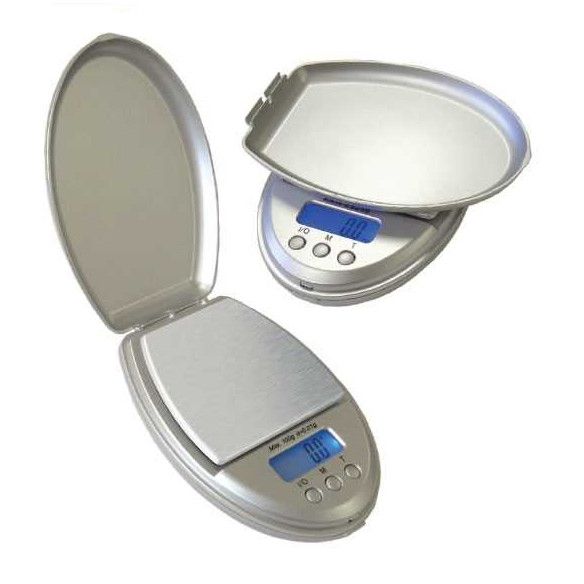
A precision scale makes weights known instead of guessed: